
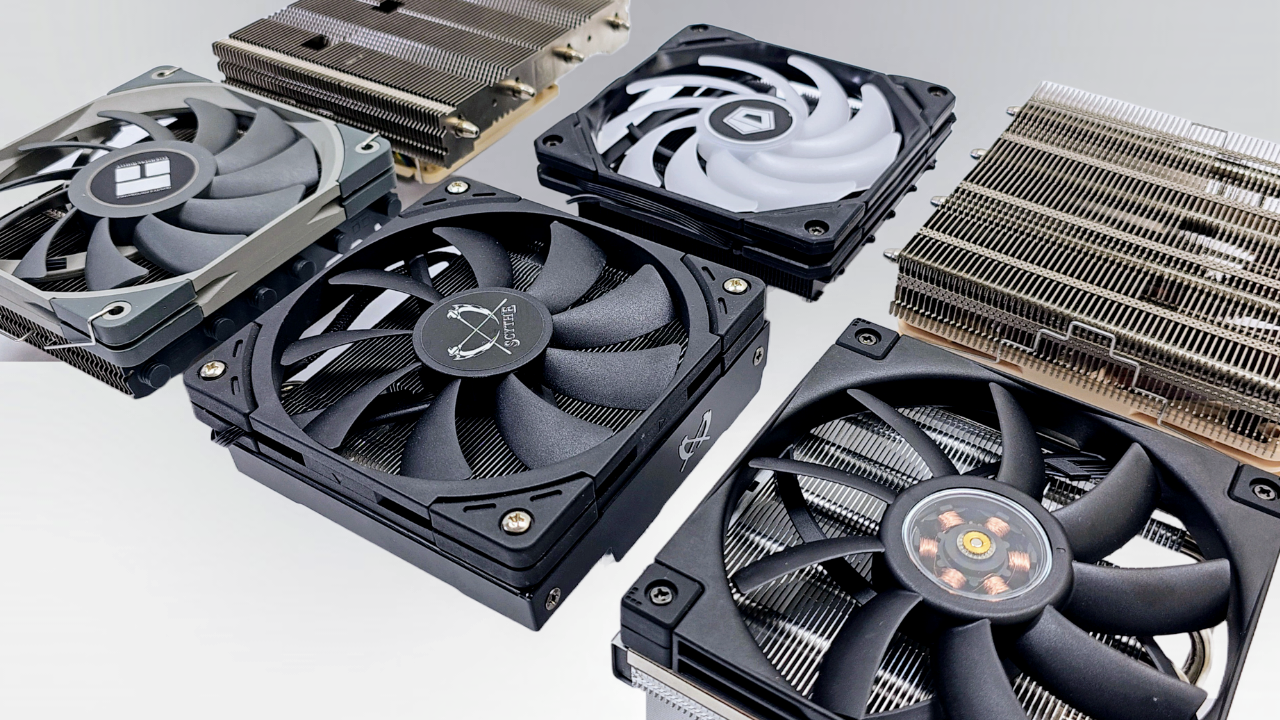
LOW PROFILE COOLER
THERMAL COMPARISON
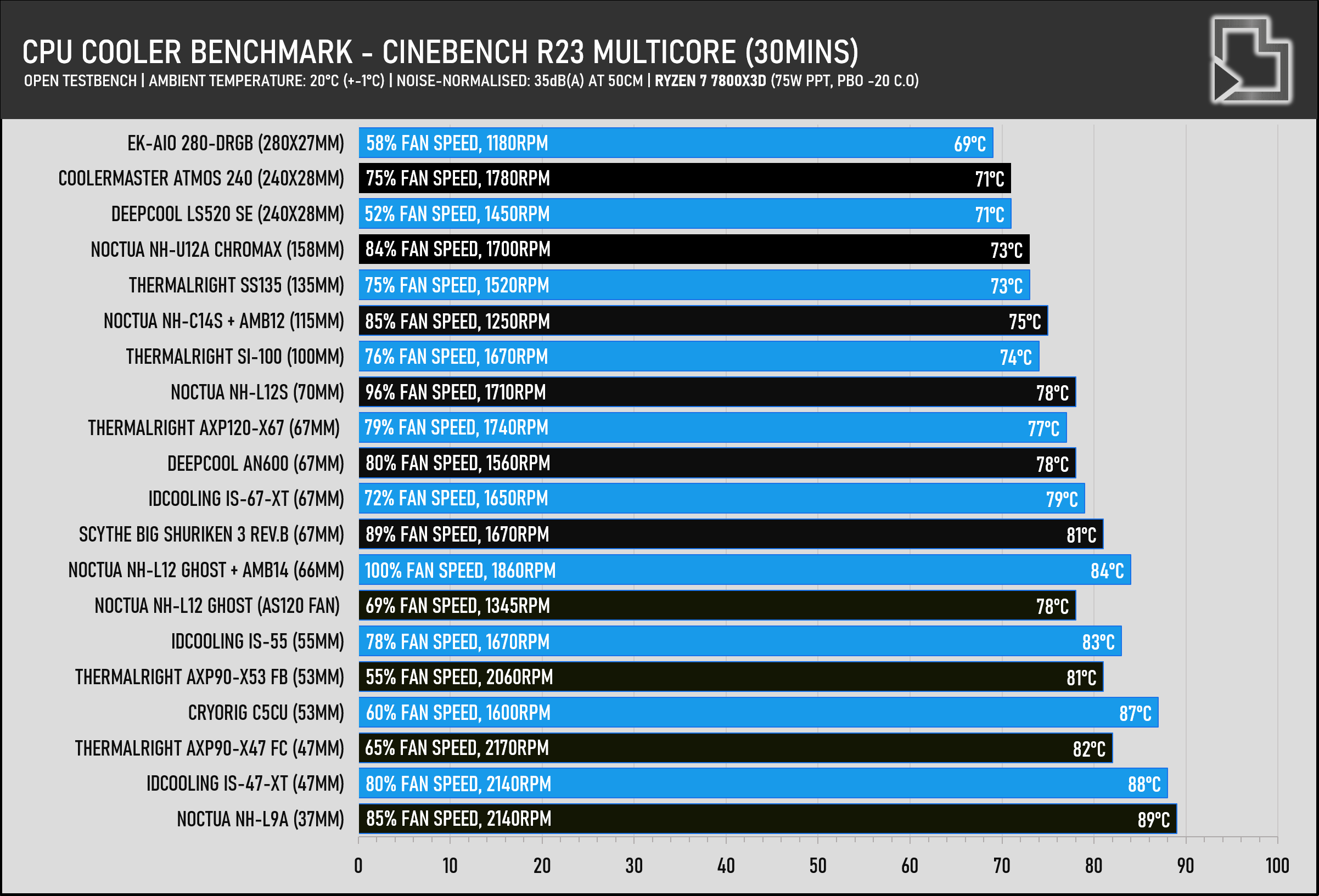
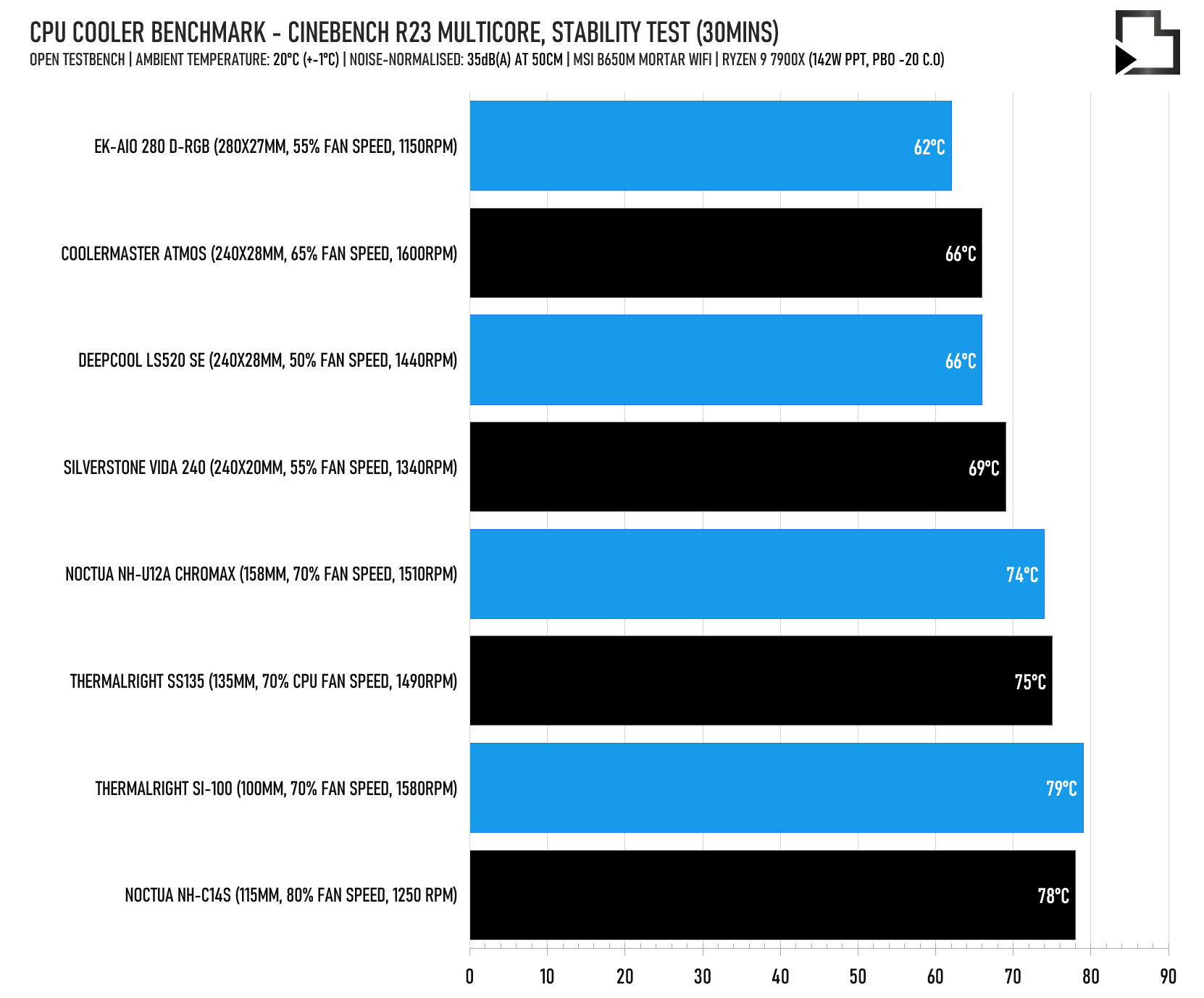
Low profile CPU cooler comparison charts for 7800X3D or 9800X3D. Compare the best low profile coolers for AM5. We’ve included some tower coolers and AIO liquid coolers for reference.

TEST SYSTEM
Testing is carried out on the BC1 Mini (open testbench) in 20°C ambient room temperature.
CPU COOLERS
Coolers are typically tested across range of CPU’s for data validation and to reduce errors. This helps account for variables between CPUs and/or platforms (paid links)
METHODOLOGY
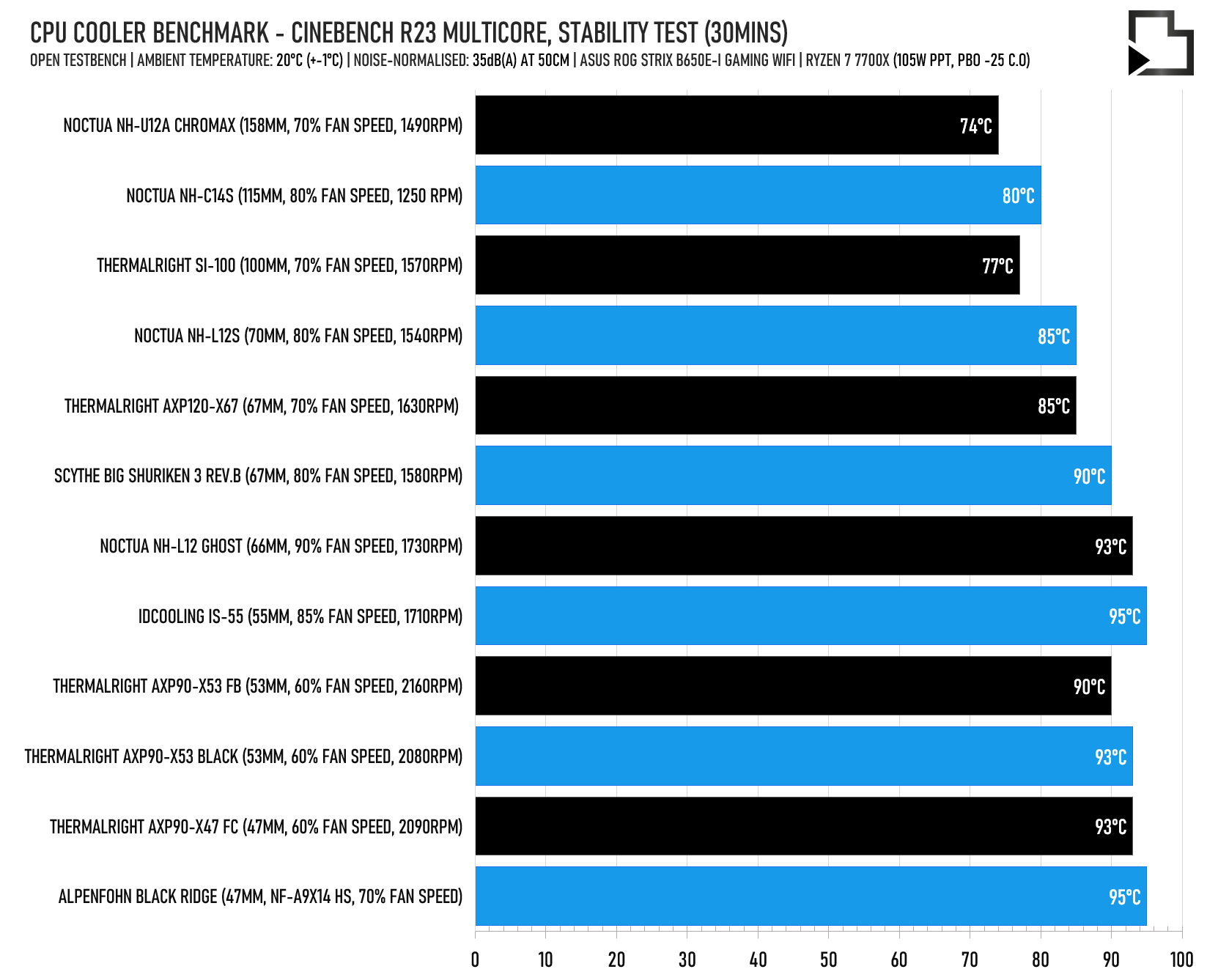
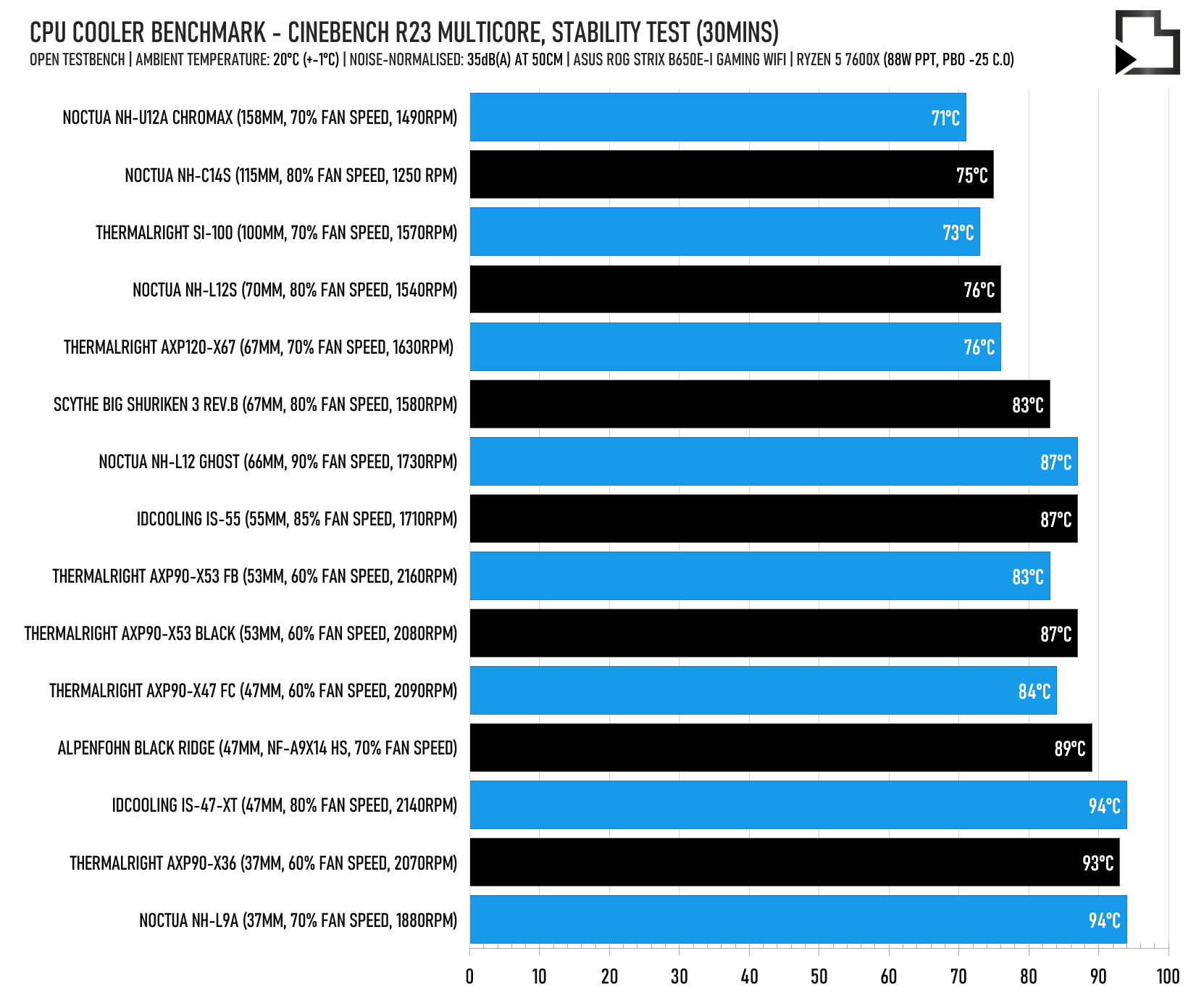
We noise normalise cooler fan speeds to 35dB(A) at distance of 50cm to best of our ability. This helps eliminate brute force cooling from higher RPM fans. If there are any optimisations made to stock CPU performance, this will detailed in individual charts.
We run Cinebench R23 multicore (stability test) for period of 30 minutes. This provides worse case scenario and is consistent for a given CPU. Coolers are typically tested across range of CPU’s for data validation and to reduce errors. This helps account for variables between CPUs and/or platforms. We do our best to ensure testing is as consistent as possible. Gaming thermals for given CPU will typically be lower than multicore temperatures, but this isn’t always the case.
NOTES
Thermalright AXP90 series coolers perform better in one orientation vs. the other. This is particularly important on Intel as the cooler can be mounted in both orientations.
Case, motherboard, GPU installed directly in the PCIe slot, distance from the side panel, and environment are all factors that can impact cooler performance and behaviour. This is means that one users results may not be directly comparable to another’s; even with same CPU and cooler.
CPU load may affect cooler scaling. The lower the load, the more the lines blur between different cooler performance classes. The thermal gap typically widens at higher loads between coolers of different capabilities.